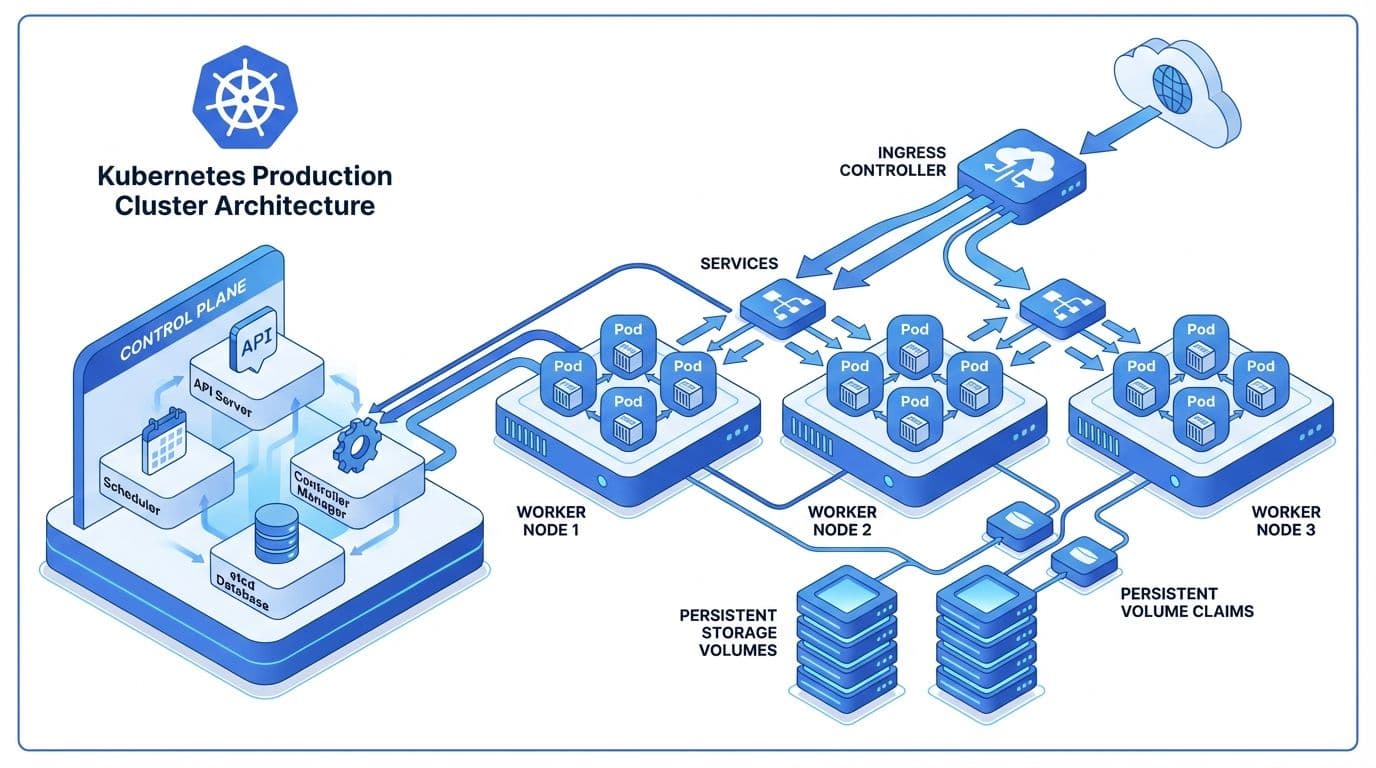
Learn the essential steps, components, and best practices for running Kubernetes clusters in production, including infrastructure choices, deployment strategies, and observability.
QT
QuantaCodes Team
Author
Updated 2 min read
Learn the essential steps, components, and best practices for running Kubernetes clusters in production, including infrastructure choices, deployment strategies, and observability.
Kubernetes has become the de facto standard for container orchestration, but moving from development to production requires careful planning and best practices. In this guide, we'll walk through the essential steps to deploy and manage Kubernetes clusters in production environments.
Kubernetes provides powerful features for running containerized applications at scale:
When deploying Kubernetes in production, you have several options:
A production-ready Kubernetes cluster should include:
Blue-green deployments minimize risk by running two identical production environments. Traffic is switched between them during deployments, allowing instant rollback if issues arise.
Canary releases gradually roll out changes to a subset of users before full deployment. This approach helps catch issues early with minimal impact.
Kubernetes native rolling updates incrementally replace old pods with new ones, ensuring continuous availability throughout the deployment process.
Effective monitoring is crucial for production Kubernetes:
Running Kubernetes in production requires thoughtful planning around infrastructure, deployment strategies, and observability. Start with managed services to reduce complexity, implement proper monitoring from day one, and gradually adopt advanced features as your team gains experience.
Ready to modernize your infrastructure? Contact QuantaCodes to discuss your Kubernetes journey.